
Key Points
- Before calling for emergency AC repair, work through these checks — many AC failures are caused by simple issues like a tripped breaker, wrong thermostat setting, or dirty air filter.
- According to the U.S. Department of Energy, replacing a clogged air filter can improve AC efficiency by 5–15% — a dirty filter is one of the most common and most overlooked causes of cooling failure.
- Check the thermostat first — verify it’s in “Cool” mode, set below the current room temperature, and that the batteries are fresh.
- A circuit breaker that trips repeatedly is not a normal occurrence — it signals an underlying electrical fault that requires a licensed HVAC technician.
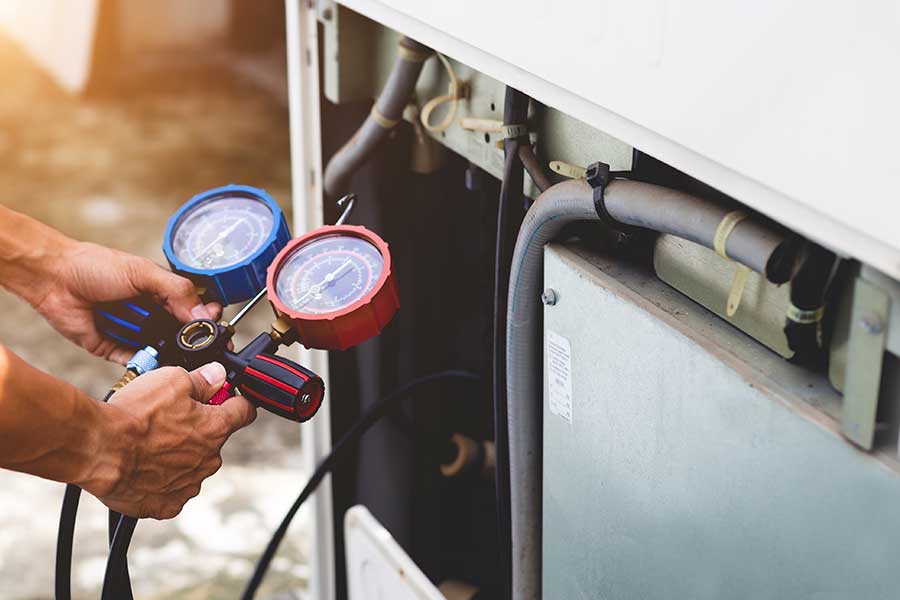
- Hissing sounds or ice on the refrigerant lines are the two most reliable signs of a refrigerant leak — never attempt to handle refrigerant yourself.
- Unusual noises (grinding, buzzing, hissing, banging) should never be dismissed — each points to a specific mechanical or electrical issue that worsens with continued operation.
- Contact Saylor’s Systems for emergency AC repair throughout Eureka, MO — fast, professional service when your cooling system needs it most.
When your cooling system unexpectedly stops working, a comfortable home can turn into a sweltering situation fast. Don’t panic — there are steps you can take to address the issue before calling for professional help. Begin by checking the thermostat settings and inspecting the air filter. These initial checks resolve the issue more often than you’d expect. If not, here’s everything else to look at.
Check the Thermostat Settings
Start with the simplest possible fix — your thermostat. Before anything else, verify:
- The thermostat is set to “Cool” mode — it’s easy to accidentally switch to “Heat” or “Fan,” neither of which will cool your home
- The temperature setpoint is lower than the current room temperature — if the room is already at the set temperature, the system won’t run regardless of how it’s configured
- The thermostat screen is on and responsive — if it’s blank or unresponsive, the batteries are likely dead
Most thermostats use AA or AAA alkaline batteries. If the screen is blank or settings changes have no effect, replace the batteries with fresh ones. Turn off the power, remove the cover, swap the batteries, and restore power. This simple fix resolves many apparent AC failures. If the problem persists, contact Saylor’s Systems for a professional thermostat repair or installation in Eureka, MO.
Inspect the Air Filter
A dirty air filter is one of the most common — and most preventable — causes of cooling failure. When the filter becomes clogged with dust and debris, airflow through the system is restricted, forcing the AC to work harder while delivering less cooling output.
Check your filter monthly and replace it every 1–3 months depending on usage and household conditions. If the filter looks grey, brown, or visibly caked with debris, replace it immediately — this single step can restore cooling performance without any other repairs needed.
Need help staying on schedule? Saylor’s Systems offers AC and furnace filter replacement in Eureka, MO to keep your system running cleanly year-round.
Examine the Circuit Breaker
If the thermostat and filter check out, head to your electrical panel. A tripped breaker is a common cause of sudden AC failure — and resetting it takes seconds.
Locate the breaker labeled for your AC unit. If it’s in the middle position (tripped), firmly switch it fully to “off” then back to “on.” Always follow electrical safety precautions — dry hands, well-lit area, never touch the panel with wet hands.
Important: If the breaker trips again immediately or trips repeatedly over time, do not keep resetting it. Frequent trips signal an underlying electrical fault — overloaded circuit, faulty wiring, or a failing component — that requires a licensed technician. Contact Saylor’s Systems for professional diagnosis.
Look for Refrigerant Leaks
If the system is running but not cooling, a refrigerant leak may be the cause. Signs to look for:
- Hissing sounds from the indoor or outdoor unit — refrigerant escaping under pressure
- Ice forming on the refrigerant lines — low refrigerant causes the evaporator coil to drop below freezing
- Reduced cooling output despite the system running continuously
- Higher than normal energy bills — the system works harder to compensate for lost refrigerant
If you suspect a leak, turn off the system and call a professional. Refrigerant handling requires EPA Section 608 certification — never attempt to add refrigerant yourself. Saylor’s Systems provides AC repair in Eureka, MO including refrigerant leak diagnosis and repair.
Assess the Condenser Unit
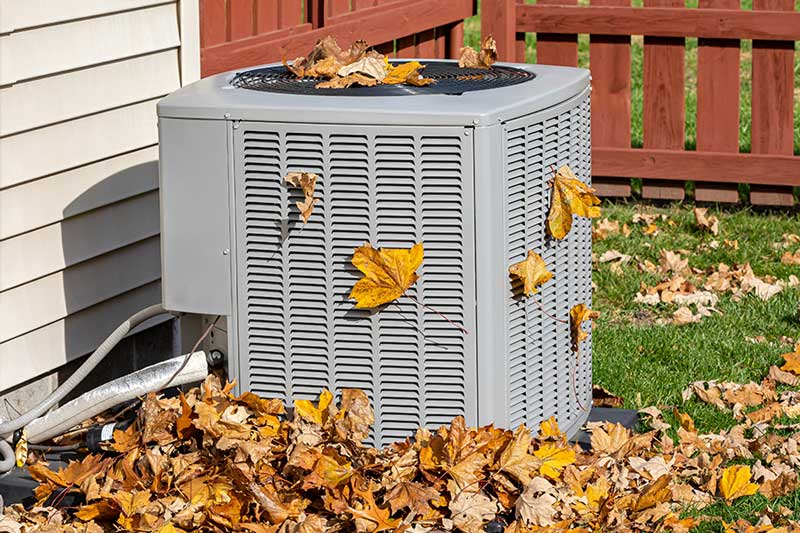
Go outside and inspect your condenser unit. A dirty or obstructed condenser is a common cause of reduced cooling performance.
- Clear debris — leaves, grass clippings, and dirt block airflow through the condenser coils
- Check the fins — bent fins obstruct airflow; use a fin comb to carefully straighten them
- Listen for unusual sounds — rattling or grinding from the outdoor unit indicates loose or failing components
- Gently rinse the coils — use a garden hose on a low setting to wash accumulated grime from the exterior fins
Keeping at least two feet of clearance around the condenser on all sides ensures adequate airflow for efficient heat transfer.
Evaluate Air Vents and Registers
Walk through your home and check every supply and return vent:
- Confirm all registers are fully open — partially closed vents force the system to work harder
- Verify nothing is blocking the vents — furniture, rugs, and curtains reduce airflow significantly
- Check that registers are aimed correctly to distribute air into the living space
- Clean any visible dust or debris from vent covers — buildup restricts airflow and lowers air quality
If multiple rooms are consistently warmer than others despite open vents, ductwork issues may be the underlying cause.
Listen for Unusual Noises
Unusual AC sounds are your system’s way of communicating a specific problem. Never dismiss them:
- Grinding — worn fan motor bearings; continued operation accelerates damage
- Buzzing — loose components, electrical issues, or a failing capacitor
- Hissing — refrigerant leak or internal pressure issue (turn off the system)
- Banging or clanking — loose or broken internal components striking other parts
- Screeching — failing motor or worn belt
If you hear any of these sounds, turn off the system and contact Saylor’s Systems for professional diagnosis. Continuing to run the system with these noises accelerates damage and increases repair costs.
Monitor the Drain Line
Your AC removes humidity from the air as it cools — that moisture flows through the condensate drain line. A clogged drain line causes water to back up, overflow the drain pan, and potentially damage walls, flooring, and the unit itself.
Signs of a clogged drain line:
- Water pooling around the indoor unit
- Musty odors from the AC vents
- The system shutting off unexpectedly (many units have a float switch that trips when the drain pan fills)
To clear a minor clog, use a wet/dry vacuum on the drain line access point or flush with a mixture of equal parts white vinegar and water. For persistent blockages, professional drain line service is the more reliable fix.
Investigate Electrical Connections
Loose or corroded wiring is a less obvious but serious cause of AC power failures. Signs to watch for include frayed wires, visible corrosion at connection points, or a burnt smell near the unit.
Safety warning: Electrical repairs must always be performed by a licensed HVAC technician. Attempting to inspect or repair wiring without proper training risks electrical shock, fire, and additional system damage. If you suspect an electrical issue, turn off the system and call a professional.
Saylor’s Systems’ certified technicians have the tools and expertise to accurately diagnose and safely repair electrical connection issues — restoring your AC quickly and protecting your home.
Key Takeaways
When your AC stops working in Eureka, MO, work through these nine checks before calling for service: thermostat settings and batteries, air filter condition, circuit breaker status, refrigerant leak signs, condenser unit condition, vent and register airflow, unusual noises, drain line blockage, and electrical connections. The DOE confirms a clogged filter alone can reduce efficiency by 5–15% — start there. A breaker that trips repeatedly, hissing sounds, ice on the lines, or any burning smell always warrant an immediate professional call. Contact Saylor’s Systems for fast, professional emergency AC repair throughout Eureka, MO.
Still No Cooling? Call Saylor’s Systems in Eureka, MO
If you’ve worked through these steps and your AC still isn’t cooling, it’s time to bring in a professional. Saylor’s Systems provides fast, expert AC repair in Eureka, MO — with certified technicians who diagnose the issue accurately and get your cooling system back up and running as quickly as possible.