



Clarkson Valley, MO is a small, affluent community tucked into the wooded hills of west St. Louis County, and the homes here reflect that setting. Many properties sit on larger lots with mature tree cover, and the custom and semi-custom builds that characterize the area often feature more complex HVAC configurations than typical suburban homes. Multi-zone systems, larger square footage, and finished walkout basements all create ductwork and equipment demands that require a technician who knows how to read the full picture rather than just the obvious fault.
Our repair services cover everything an AC system needs to run reliably. We diagnose and fix refrigerant leaks and recharges, failed capacitors and contactors, compressor and fan motor problems, frozen evaporator coils, clogged condensate drains, thermostat and control board failures, and electrical issues throughout the system. No matter the complexity of your setup, we take the time to understand how your system is configured before recommending any repair.
The wooded, hilly terrain around Clarkson Valley, MO creates microclimates that affect how hard cooling equipment has to work. Homes that sit lower on a slope or are heavily shaded by mature trees can trap humid air close to the structure, keeping outdoor units operating in conditions that accelerate component wear. We factor that in on every call we take out here.
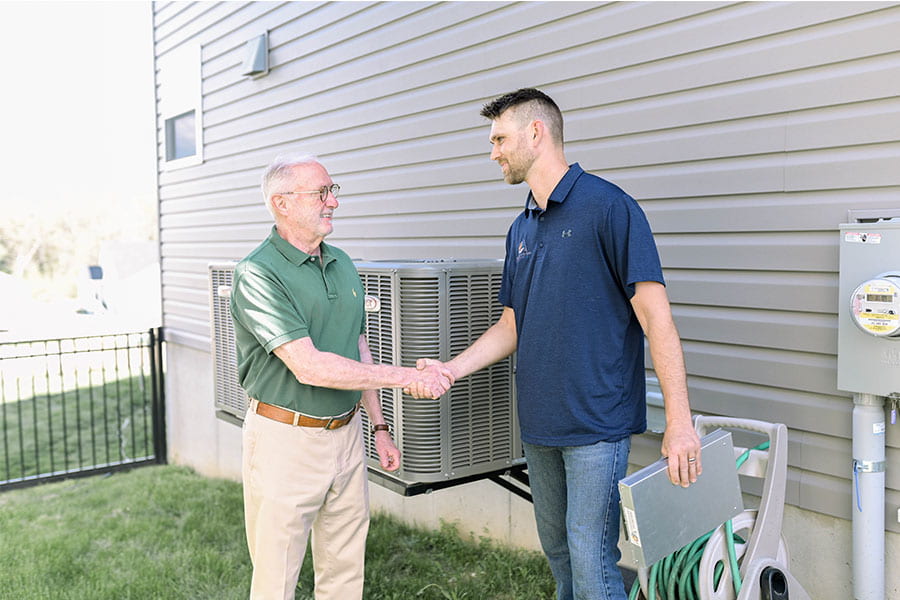
Larger, more complex homes can sometimes mask early AC problems because one failing zone does not always affect the whole house right away. These are the signs worth paying close attention to:
If something feels off in part of the house even while the rest seems fine, that is worth a call. Zoned systems can compensate in ways that hide a developing problem until it becomes a bigger one.
Clarkson Valley, MO homes are well-built, but the environment they sit in creates specific wear patterns that show up consistently in service calls across the area.
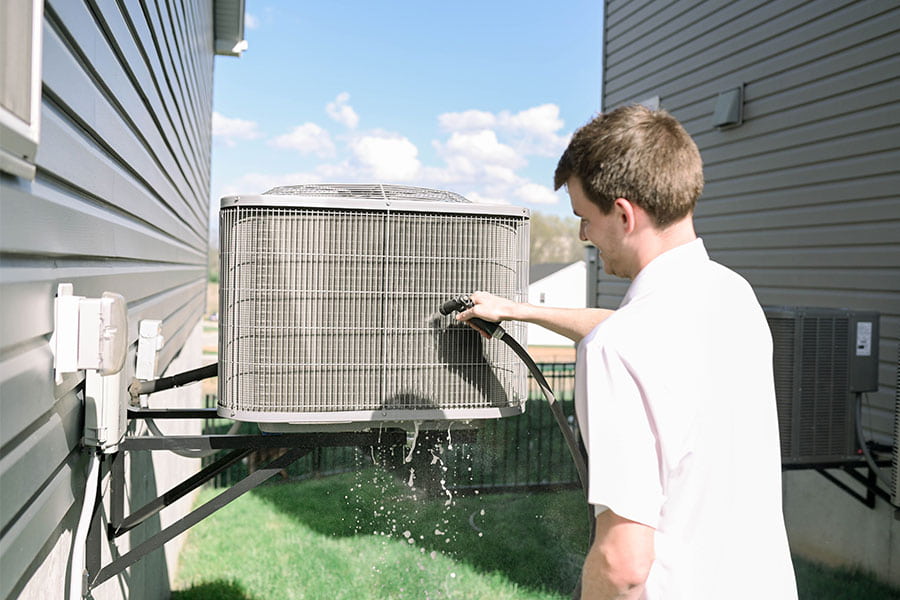
The heavy tree canopy that makes the community so attractive also deposits organic debris around and on top of outdoor condenser units year-round. Leaves, seed pods, cottonwood, and small twigs collect on condenser coils and in the cabinet around the fan, gradually restricting the airflow the unit needs to shed heat. A coil that is 20 or 30 percent blocked has to run significantly longer to achieve the same cooling result, and that extra runtime shortens the life of electrical components and the compressor itself.
Multi-zone systems in larger Clarkson Valley, MO homes also develop damper and controls issues over time. Electronic zone dampers cycle open and closed thousands of times per season, and the actuators that drive them wear out. When a damper sticks in the closed position, one area of the home stops receiving conditioned air entirely, and the rest of the system picks up the slack by running harder. That imbalance puts strain on equipment that would otherwise be in perfectly good condition.
Refrigerant line sets on older properties are another area we watch carefully. Many of the custom homes in Clarkson Valley, MO were built in the late 1980s and 1990s, and original line sets from that era are now 30 or more years old. Joints and fittings that have gone through hundreds of freeze-thaw cycles eventually develop small leaks that reduce system efficiency before anyone notices a problem.
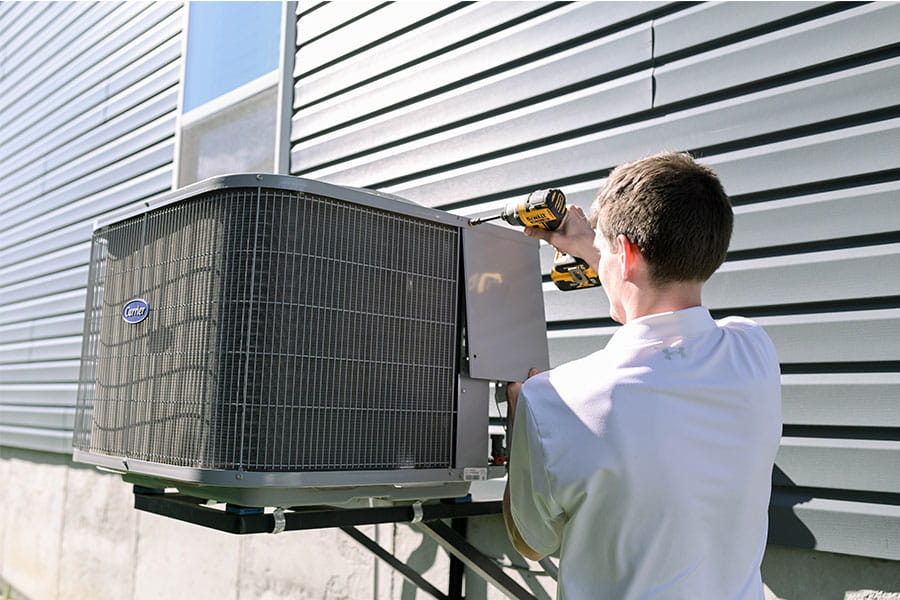
We received a call from a homeowner named Martin on a Saturday morning in August. His home had a two-zone system, and the upper level had stopped cooling almost entirely overnight while the lower level was still comfortable. He had already checked the thermostat and replaced the filter, and everything looked normal from the inside.
When our technician arrived and pulled the air handler panel, it was immediately clear that the zone damper serving the upper level had failed in the closed position. The actuator had burned out, and with that damper stuck shut, no conditioned air had been reaching the upstairs for at least several hours. The lower zone had been running the whole time trying to compensate, which explained why the equipment itself showed elevated run hours on the diagnostic readout.
We replaced the damper actuator and verified the rest of the zone controls were functioning correctly before leaving. Martin said he had not even known what a zone damper was before that morning. It is one of those components that works quietly in the background for years until it does not, and when it goes, the symptoms can look a lot like a refrigerant or equipment failure if you do not know what to check first.
Homeowners in Clarkson Valley, MO expect careful, competent work from the people they invite into their homes. That is the standard we hold ourselves to on every job, whether it is a straightforward capacitor replacement or a multi-zone diagnostic that takes most of the afternoon.
Here is what you get when you work with us:
We do not cut corners, and we do not disappear after the invoice. If something is not right, we make it right.
A damper failure typically affects one zone while others remain comfortable. A refrigerant problem usually reduces overall cooling capacity across the whole system. If only one area of your home has stopped cooling while everything else feels normal, a damper or zone control issue is the more likely cause. A diagnostic visit will confirm it either way.
Yes, in a couple of ways. Debris from trees collects on condenser coils and restricts airflow, which forces the system to work harder. At the same time, shading can actually reduce the heat load on your home, which is a benefit. The debris issue tends to outweigh the shade benefit when it comes to equipment wear, which is why annual coil cleaning matters more in heavily wooded areas.
At least once a year, ideally in spring before cooling season begins. Larger homes with multi-zone systems benefit from more thorough inspections because there are more components, more duct runs, and more points of potential failure. Catching a damper actuator or a minor refrigerant issue before summer starts is far less disruptive than dealing with it during a heat wave.
Yes, rising bills without a change in comfort can be an early sign that a system is working harder than it should to maintain the same conditions. Common causes include dirty coils, a slow refrigerant leak, a partially failed capacitor, or duct leaks. Getting it checked before comfort is affected is the most cost-effective approach.
Line sets can last 20 to 30 years or more, but older ones become more prone to small leaks at joints and fittings as the metal fatigues over time. If your home has original line sets from the late 1980s or 1990s and you have had recurring refrigerant issues, replacement may be worth considering the next time a major repair or system upgrade is scheduled.
Running the fan at a lower speed moves less air across the evaporator coil, which can cause the coil to freeze if the system is already running at capacity. It also reduces dehumidification, which is a real comfort issue in humid summers like those in the St. Louis area. We generally recommend keeping fan settings at the manufacturer-recommended level and addressing efficiency through equipment maintenance rather than reducing airflow.