



Fenton occupies a distinctive stretch of south St. Louis County where the Meramec River bends through a broad valley flanked by bluffs and wooded hillsides. The community has grown in layers over several decades, with older residential areas near the river bottom sitting alongside newer subdivisions that climbed the surrounding ridges through the 1990s and 2000s. That elevation difference within the same ZIP code means homes at the valley floor and homes on the ridge above can experience noticeably different heat and humidity conditions on the same summer afternoon.
Our repair services cover the complete range of what an AC system needs to run reliably. We diagnose and fix refrigerant leaks and recharges, failed capacitors and contactors, compressor and fan motor problems, frozen evaporator coils, clogged condensate drains, thermostat and control board failures, and electrical faults from the breaker to the air handler. We do not recommend repairs until we have run a thorough diagnostic and can explain exactly what we found and why it matters.
The Meramec River valley geography creates real consequences for AC equipment in Fenton. Homes in the lower sections of the community deal with humidity levels that rival anything in the St. Louis metro during peak summer months. That moisture-laden air makes heat exchange harder for outdoor condensers, forces longer run cycles, and accelerates the wear on components that are already working at the edge of their capacity on the hottest days of the year.
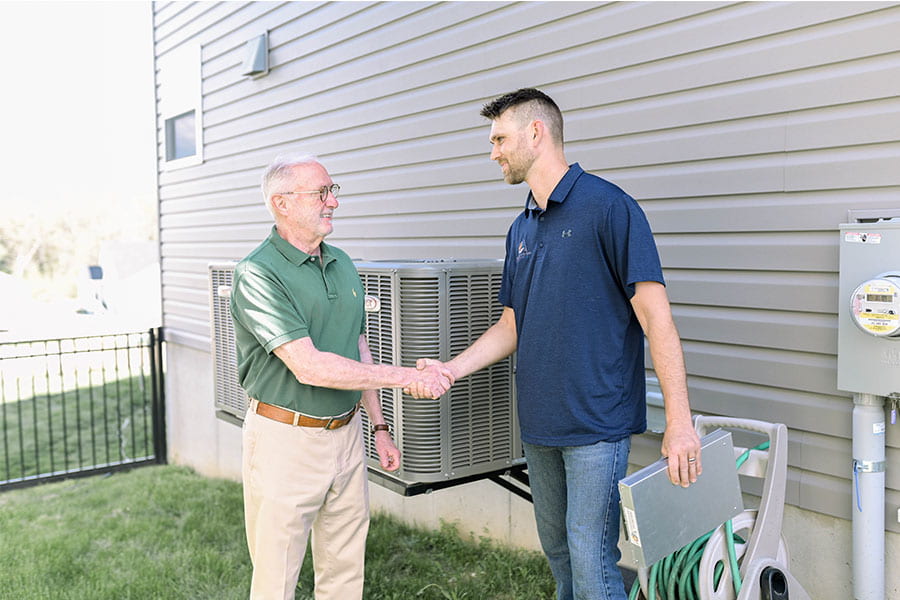
Fenton’s valley setting means that when summer heat arrives, it arrives with humidity that makes a struggling system feel much worse than the thermometer alone suggests. Do not ignore these warning signs:
In a climate as humid as the Meramec valley in July, a system that is already compromised will not just underperform. It will fail, usually at the worst possible moment. Catching problems early is almost always the more affordable path.
Fenton’s geography splits the community into two distinct thermal environments, and the AC problems that show up in each reflect those differences in ways that are worth understanding.
Homes in the lower valley sections near the Meramec deal with the full force of river basin humidity. Outdoor condenser units in these areas are operating in air that is already heavily saturated throughout June, July, and August. When ambient humidity is high, the temperature difference between the refrigerant and the outdoor air shrinks, which reduces how efficiently the condenser can reject heat. The system has to run longer to accomplish the same cooling result, and that extended runtime is the primary driver of premature component failure in this part of Fenton.
Homes on the ridgelines above the valley have a different problem set. Many of the subdivisions built on elevated ground in the 1990s and 2000s have two-story layouts with ductwork that was sized for the equipment available at the time. As those systems age and are replaced with modern units that move air differently, duct runs that were once adequate can become restrictive or imbalanced. Upper floors in these homes often run warmer than lower floors, and that chronic imbalance puts consistent extra demand on the system that shortens equipment life.
Condensate drainage is a common issue throughout Fenton regardless of elevation. The volume of moisture that an AC system extracts from the air during a St. Louis summer is substantial, and drain lines that are partially blocked or improperly sloped back up more quickly than most homeowners expect. A backed-up condensate drain can trigger a safety shutoff, cause water damage to finished spaces, or create conditions for mold growth near the air handler.
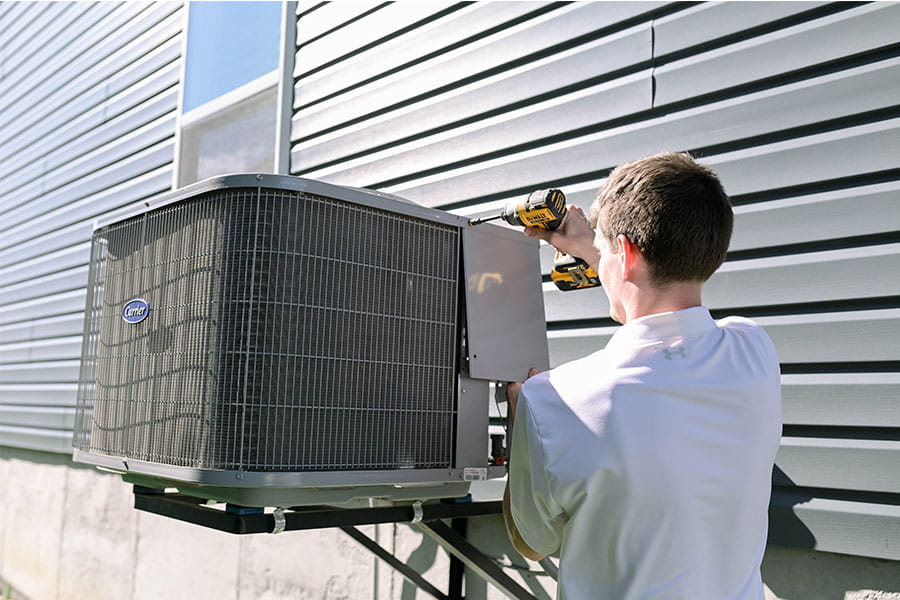
We took a call from a homeowner named Phil on a Tuesday in late June. His house sat in one of the older subdivisions near the river, and he had woken up to find the system running but the house at 82 degrees and climbing. The outdoor unit sounded normal to him, and he had not noticed anything unusual in the days leading up to the problem.
When our technician arrived and ran diagnostics, the system was low on refrigerant. Pressure testing found a small leak at a fitting on the outdoor unit where the line set connected, a spot that had likely been seeping slowly for at least a full season. The system had been limping along on reduced refrigerant long enough that the compressor had been running hotter than normal for an extended period, but compressor health checked out within acceptable range and no lasting damage had occurred.
We repaired the fitting, pressure-tested the repair, and recharged the system to the correct level. Phil said the house cooled down faster that afternoon than it had in two summers. He had noticed it was taking longer to cool off on hot days but had assumed it was just the age of the house and the river humidity. The age of the leak, not the house, was the real answer.
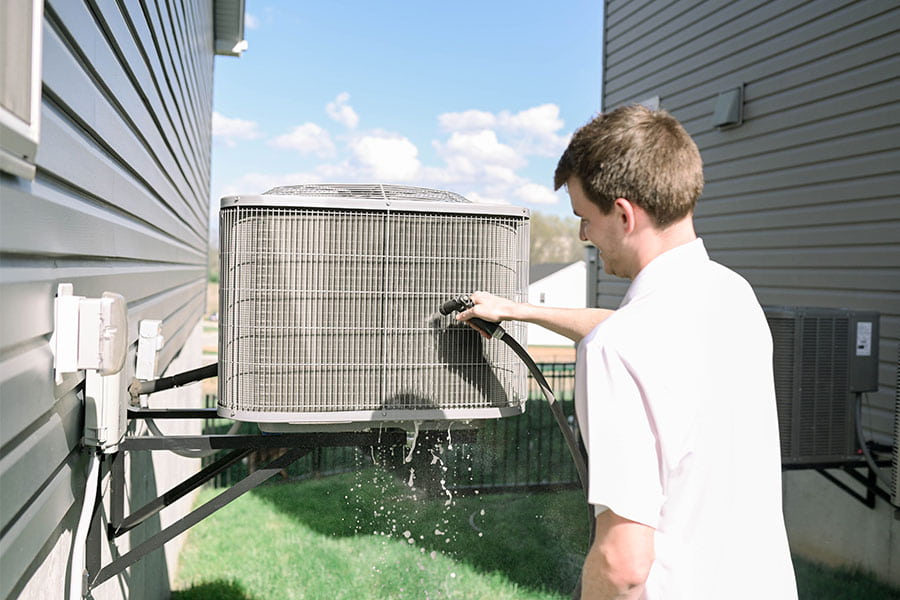
Fenton is the kind of community where people know their neighbors and expect the businesses they hire to operate the same way. We are a small, family-owned company and that is not an accident. It means every customer gets the kind of attention that only comes when the people doing the work actually care about the outcome.
Here is what you get when you work with us:
We built this business on doing right by the people we work for. That is still the whole plan.
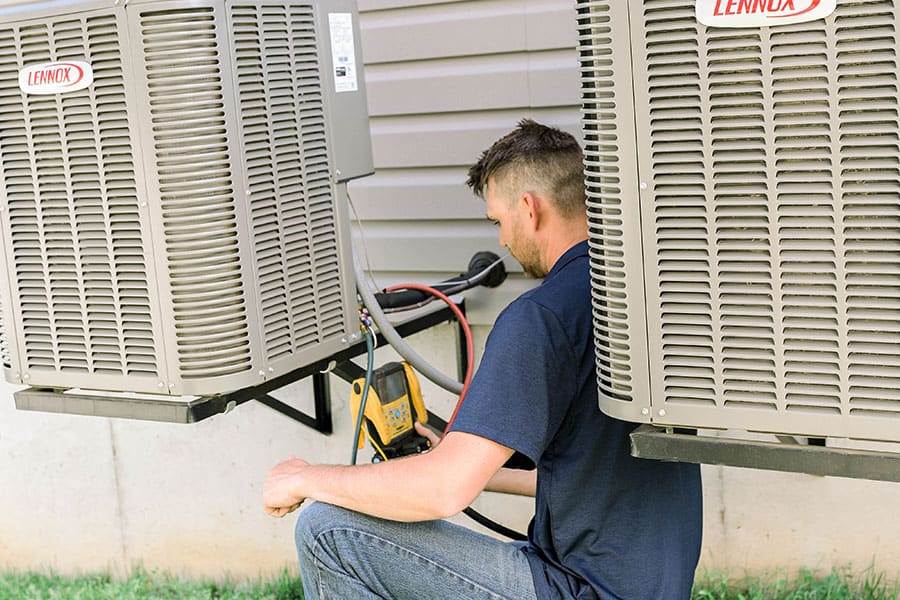
Yes, meaningfully so. The river basin humidity that builds up through summer forces AC systems in the valley to run longer and work harder than equipment in less humid areas. That extra demand accelerates wear on electrical components, strains the compressor, and leads to faster buildup in condensate drains. Annual maintenance is not optional in this environment. It is what keeps systems from failing before their time.
There are a few possible causes. An oversized system cools the air quickly but shuts off before it can adequately dehumidify, leaving the air cold but clammy. A refrigerant issue reduces the system’s ability to pull moisture from the air. Duct leaks that draw in unconditioned air from a crawl space or attic can also introduce humidity faster than the system can remove it. We can identify which situation applies with a proper diagnostic.
Automatic shutdowns are usually triggered by a safety mechanism. A full condensate drain pan with a float switch is one of the most common causes. A refrigerant pressure fault, a high-temperature limit on the compressor, or an electrical fault at the control board can also trigger shutdowns. The system is protecting itself, which is a sign something needs attention before the next cycle.
Line sets that are 20 or more years old are worth evaluating if you have had recurring refrigerant issues. Repeated leaks at different points along the same line set, or a leak that reappears after a proper repair, can indicate metal fatigue throughout the tubing. If your system is being replaced, replacing the line set at the same time is often the right call. If you are repairing an existing system, we will tell you honestly whether the line set is a factor.
A tune-up is a preventive visit that covers inspection, cleaning, and minor adjustments designed to keep the system running efficiently and catch developing issues before they become failures. A repair visit addresses a specific problem that has already occurred. Both have value, but maintenance is what reduces how often repairs are needed. For homes in the Fenton area where systems work harder than average, the two go hand in hand.
Yes. A whole-home dehumidifier that integrates with your existing HVAC system can make a significant difference in comfort during the peak humidity months along the Meramec valley. It takes the moisture load off the AC system, which improves efficiency and allows the equipment to focus on temperature rather than trying to do both jobs at once. We can walk you through the options if it is something you want to explore.