



Murphy is a community where homes are spread out, lots are generous, and neighbors tend to know each other. It is the kind of place where you want a service company that operates the same way, straightforward, dependable, and not looking to make a quick buck off a homeowner who just needs a working AC.
At Saylors Systems Heating and Air, we service the full range of cooling systems found in Murphy, from aging central air units in homes that have been in families for decades to newer systems in more recently developed pockets of the area. We come prepared for whatever we find and give you a clear picture before any work begins.
Our repairs address the problems that actually show up on service calls here, including refrigerant leaks, failed capacitors and contactors, compressor faults, frozen evaporator coils, condensate drainage failures, and electrical issues. Every repair is explained in plain language and backed by work we stand behind.
Murphy summers get hot and stay that way for weeks at a stretch. When your AC starts showing warning signs, it pays to act before the system stops working entirely on the worst possible day.
None of these are problems to put off, especially in a part of Jefferson County where the heat index can make a broken AC feel like a real emergency fast.
Murphy occupies a stretch of Jefferson County that sits at the transition between suburbia and more rural Missouri. That geography brings with it a set of conditions that affect cooling systems in ways that homeowners do not always connect to their HVAC.
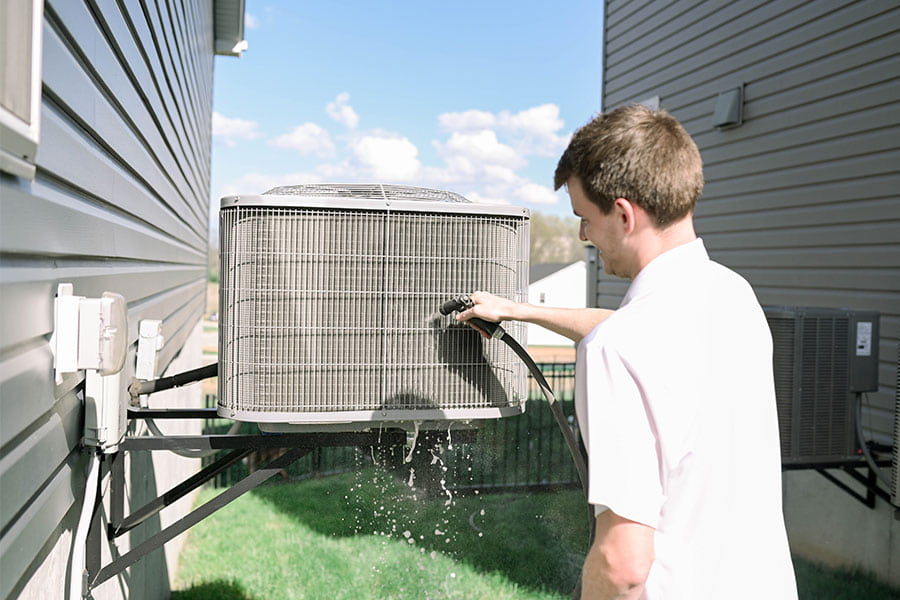
Properties here tend to run larger than you would find closer to the city, and many homes sit on wooded or partially wooded lots. That sounds like a benefit for cooling, and in some ways it is. But heavy tree coverage also means outdoor condensing units are often surrounded by leaves, seed pods, and airborne debris that accumulate quickly. A condenser that cannot breathe efficiently has to run longer to do the same amount of work, and that extra run time adds up in wear and energy costs.
Murphy also sees a meaningful share of homes built in the late 1980s and 1990s during Jefferson County’s residential expansion. Systems installed during that era are now reaching or exceeding their expected service life. Many are still running, but running hard, and components like capacitors and contactors are the first to show the strain. A system that seems functional may be one heat wave away from a compressor failure if those parts have not been checked recently.
The area’s soil and terrain also contribute to foundation moisture that can work its way into crawl spaces and lower-level mechanical rooms. Elevated humidity around the air handler affects coil performance over time and creates the conditions for mold growth inside ductwork, something that is easy to miss until the air quality inside the home starts to suffer.

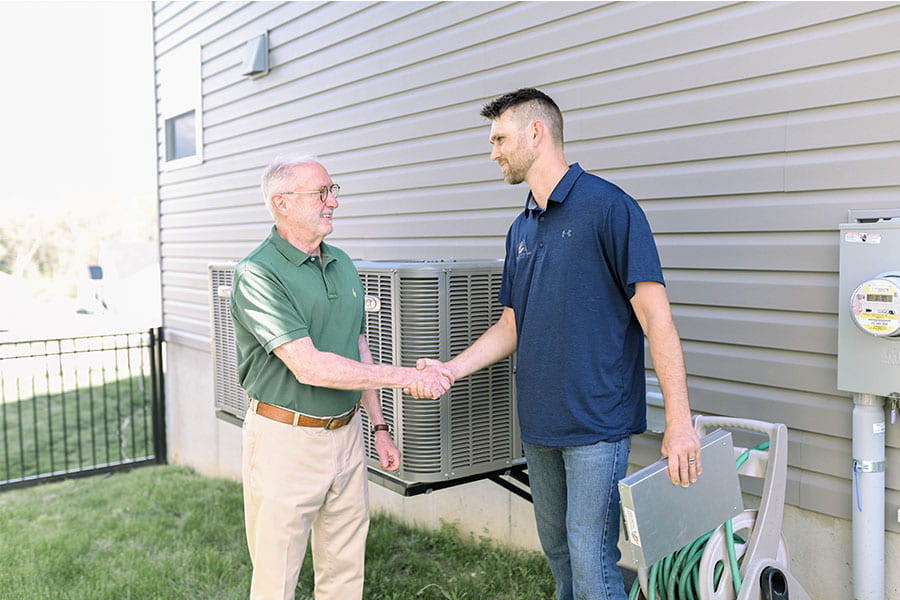
Gary had been nursing his AC through the summer, turning it off during the cooler parts of the day to give it a rest. When he finally called, the system had stopped cooling altogether and was making a low humming sound but not starting up.
When our technician arrived, the capacitor had failed entirely. The compressor was trying to start but had nothing to help it get going, so it would hum, trip the thermal overload, and shut back down. We replaced the capacitor, let the compressor cool, and ran the system through a full cycle to confirm everything was operating correctly before leaving.
Gary mentioned he had noticed the system taking longer than usual to cool the house over the past couple of seasons. That is a classic sign a capacitor is weakening before it fails completely. A tune-up the previous spring likely would have caught it. We walked him through a maintenance plan so it would not catch him off guard again.
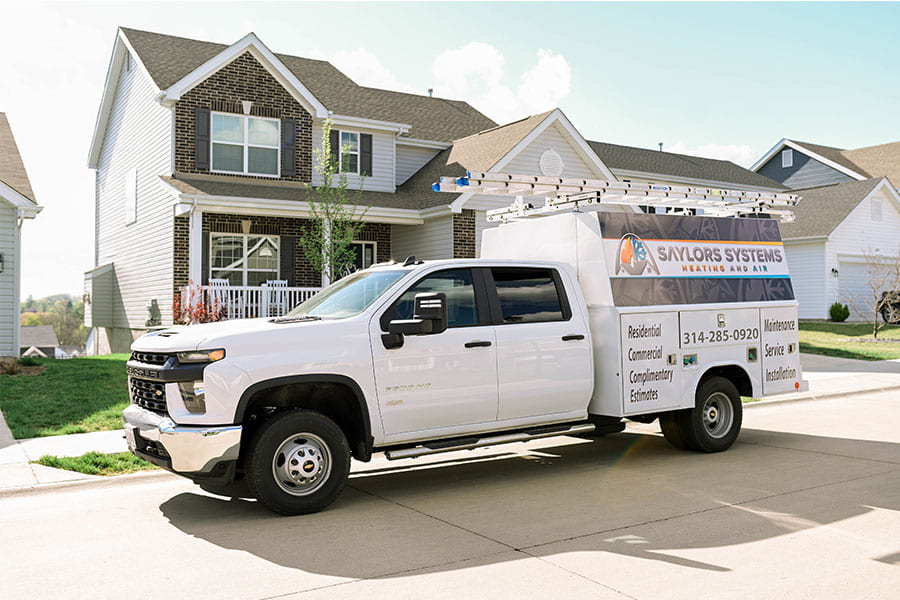
We started Saylors Systems because we believed homeowners in this part of Missouri deserved better than what they were getting from larger, impersonal HVAC companies. Austin and Danielle Saylors built this business around showing up when promised, explaining what we find, and only recommending what is actually needed.
When you call Saylors Systems, you are not getting a dispatcher reading from a script. You are getting a team that takes the job personally and will not leave until the work is done right.

A capacitor gives your compressor and fan motors the electrical boost they need to start up and keep running. When it weakens or fails, the motors cannot start properly and the system either struggles to cool or stops working altogether. It is one of the most common parts we replace on service calls.
Sudden failures are often caused by a tripped breaker, a failed capacitor, a bad contactor, or the system overheating and shutting itself off as a safety measure. Check your breaker panel first, but if it trips again right away or the system still will not start, call us before running it further.
Shade can reduce the heat load on your home, which is a benefit. But trees also shed debris that collects around your outdoor condensing unit and restricts airflow. Keeping the area around your condenser clear of leaves, seed pods, and overgrown vegetation is one of the simplest things you can do to protect your system.
During extreme heat, longer run times are expected. But if the system is running nonstop and still not reaching your set temperature, that points to a problem, whether it is low refrigerant, a dirty coil, poor airflow, or a system that is undersized for the space. That is worth having a technician look at.
Signs include musty odors coming from your vents, visible condensation on ductwork, or worsening indoor air quality. Crawl space moisture can accelerate coil buildup and create conditions for mold inside the duct system. If you suspect an issue, we can take a look during a service visit.
Sometimes, yes. It depends on the specific repair, the overall condition of the system, and how much life it realistically has left. We will always give you an honest comparison of repair versus replacement so you can make the call that fits your budget and your plans for the home.