



Valley Park is a tight-knit community with a lot of character, and the homes here reflect that, ranging from modest mid-century builds near the river bottom to more recently updated properties climbing the bluffs above town. Whatever your home looks like and whatever system is running inside it, Saylors Systems Heating and Air will show up prepared to diagnose it correctly and fix it right.
We service all central cooling configurations found throughout Valley Park, including older single-stage systems in homes that have been in families for generations and newer equipment installed during recent renovation projects. We do not arrive with assumptions. We run a full diagnostic first and give you an honest picture of what we find before any work begins.
Our repair work covers refrigerant leaks and recharges, capacitor and contactor replacement, compressor diagnostics, evaporator coil cleaning and repair, condensate drain service, blower motor failures, and electrical faults throughout the system. Every repair gets explained in plain terms, and we stand behind the work we do.
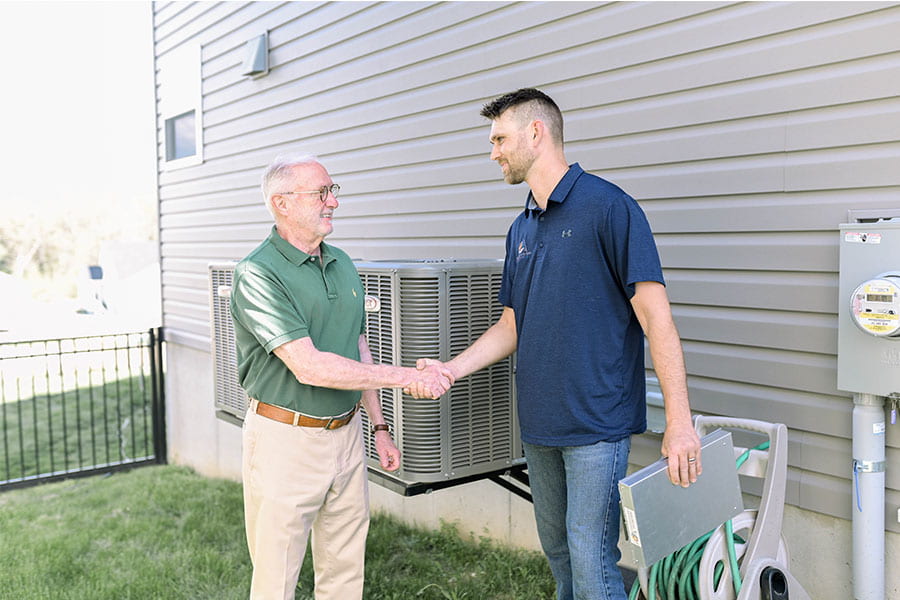
Valley Park summers settle in hard, and a cooling system that is starting to wear will usually give you a window to act before it fails completely. Knowing what to watch for can save you from a breakdown on the hottest day of the year.
In Valley Park especially, where river valley humidity adds to the system’s workload from day one of cooling season, early warning signs are worth taking seriously rather than waiting out.
Valley Park sits where the Meramec River bends through one of the more geographically distinct pockets of St. Louis County, and that setting does more than give the town its name. The river valley creates a humidity trap. Warm, moisture-laden air settles into the low-lying areas around town and lingers, particularly overnight, in ways that communities sitting on higher ground do not experience to the same degree. For homeowners here, that means AC systems are pulling double duty from the start of cooling season, working to lower both temperature and moisture at the same time.
The elevation difference between the river bottom and the bluff properties above creates a split in how homes experience summer heat. Homes closer to the valley floor deal with the heaviest ambient humidity and the limited air movement that comes with being sheltered by surrounding terrain. Homes higher on the bluffs face more direct sun exposure and wind-driven debris that collects around outdoor units. Both conditions stress cooling equipment, just in different ways and for different reasons.
Flood history is a real factor for some Valley Park properties. Homes that have experienced water intrusion, even years or decades ago, sometimes carry persistent moisture in crawl spaces and lower mechanical areas that never fully dried out. That chronic dampness accelerates corrosion on electrical components inside the air handler and shortens the effective life of coils and drain systems faster than normal aging would.
Valley Park also has a meaningful share of homes built in the postwar decades, when construction standards for vapor barriers and insulation were far below what is expected today. Those homes breathe more than modern construction does, which means outdoor humidity finds its way inside more readily. The AC ends up compensating for a building envelope that was never designed to hold moisture out the way it should.
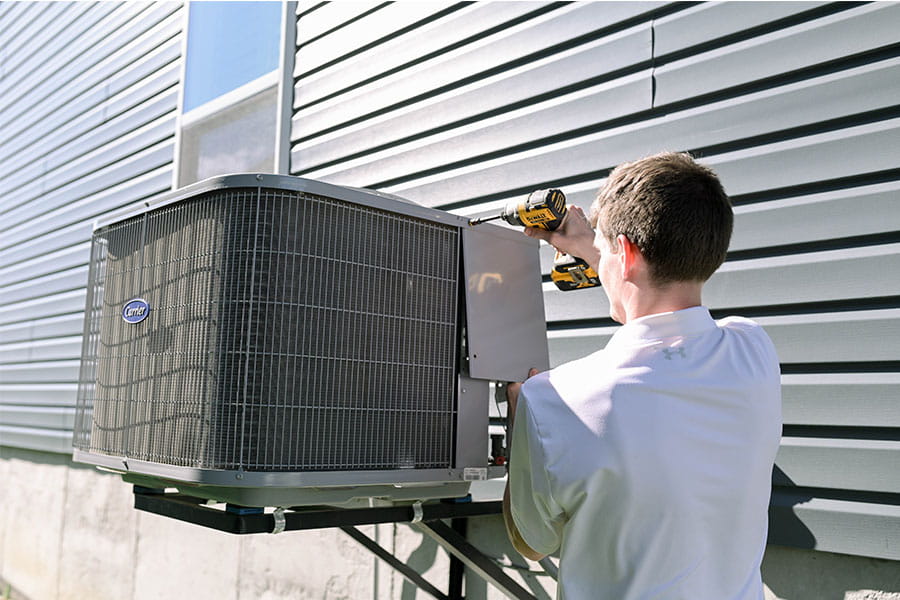
Todd called on a Friday afternoon in late July. His AC had been running all day but the house felt like it was getting warmer, not cooler, and the air coming out of the vents had a faint musty smell he had not noticed before.
His home near Meramec Station Road was a 1960s build with the original duct layout still mostly intact. When our technician opened the air handler, the evaporator coil had a heavy layer of biological growth on the surface, a result of the condensate drain running slow for long enough that moisture had been sitting against the coil face for at least one full season. Airflow through the coil was severely restricted, and the refrigerant charge was low from a slow leak that had likely been losing ground for a year or two.
We cleaned and treated the coil, cleared and flushed the drain line, located and repaired the refrigerant leak, and brought the charge back to spec. The musty smell cleared within a day as the coil dried out and the drain stayed open. Todd said he had written off the smell as something in the house. It was the HVAC system the whole time.
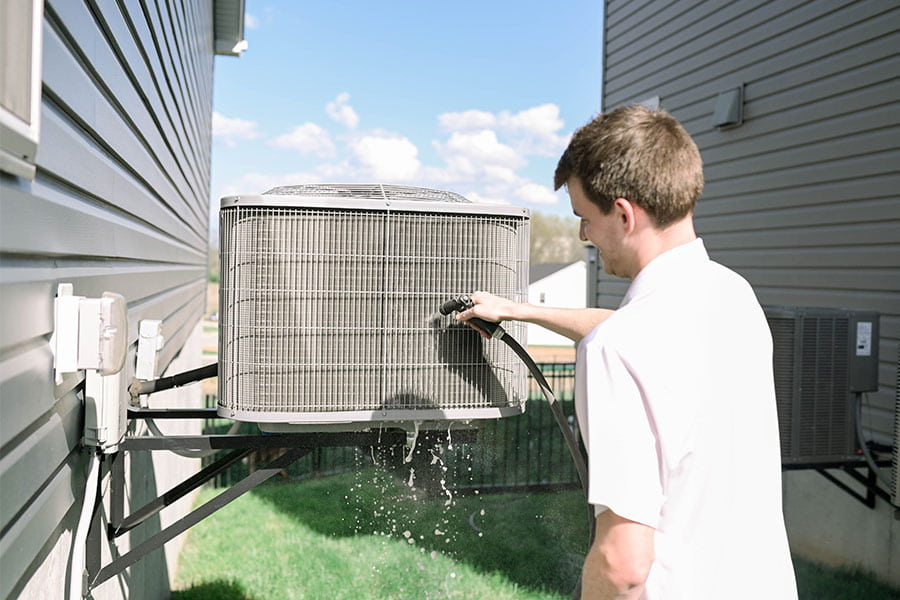
Valley Park is the kind of place where people notice who does good work and who does not, and word travels fast in a community this size. Saylors Systems has built its reputation in towns just like this one by doing things the right way every time, not just when it is convenient. Austin and Danielle Saylors started this company because they believed homeowners deserved honest service from people who actually care how the job turns out.
When we leave a Valley Park home, we want the homeowner to feel like they got a straight deal and a repair that actually solved the problem. That is the standard we hold every job to.
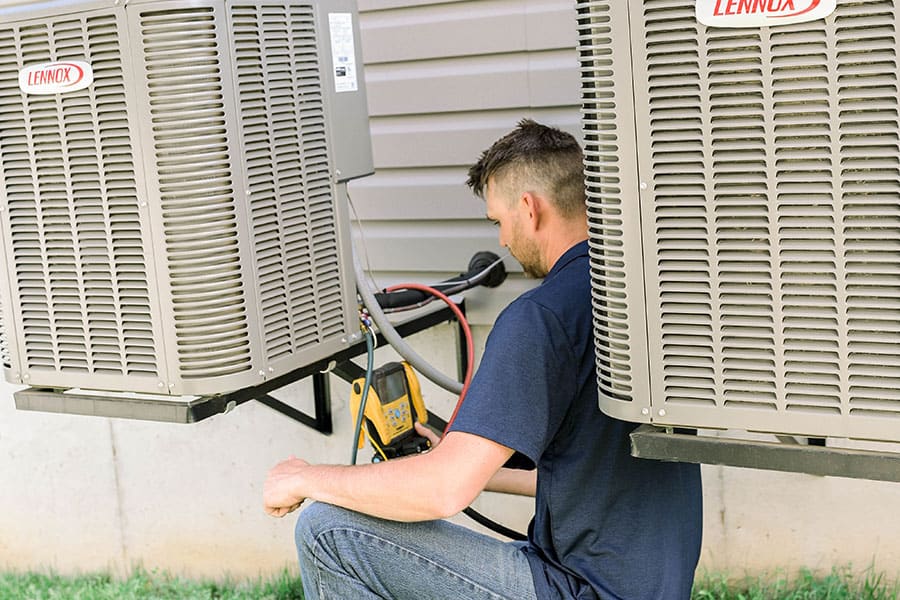
In Valley Park’s river valley setting, ambient outdoor humidity is higher than average, and your AC has to remove that moisture from the air continuously. If the system is low on refrigerant, has a fouled evaporator coil, or is running at reduced capacity, it will lower the temperature but struggle to pull moisture out effectively. The result is a home that feels damp even when the thermostat reads correctly.
A musty odor from the vents usually points to biological growth on the evaporator coil or inside the duct system. It often develops when a slow condensate drain allows moisture to sit against the coil surface for an extended period. Cleaning the coil and clearing the drain line typically resolves it, though in some cases duct cleaning is also warranted.
Original ductwork from that era is not automatically a problem, but it is worth evaluating. Older ducts can have loose connections, deteriorated insulation, and sizing that does not match modern equipment well. If your system seems to work harder than it should or some rooms never quite cool down, the duct system may be a contributing factor.
Past water intrusion can leave behind elevated moisture levels in crawl spaces and lower mechanical areas that persist long after the visible damage is repaired. That chronic dampness accelerates corrosion on electrical components and shortens the life of coils and drain systems. If your home has a flood history, mention it when you call so we can factor it into the diagnostic.
Yes. On high-humidity days your system is working to remove moisture from the air in addition to lowering the temperature, and that dehumidification load adds runtime. In a river valley community like Valley Park where humidity is a persistent summer condition, longer run cycles on muggy days are expected. If the system is running constantly and still not reaching your set temperature, that is when a service call is warranted.
For most homes, inspecting the coil annually during a tune-up is sufficient. In Valley Park homes with higher ambient humidity, older ductwork, or a history of slow drain issues, staying on top of coil cleanliness matters more than average. A coil that is even partially fouled loses efficiency quickly and creates the conditions for moisture buildup and odor problems.