



Wildwood homeowners chose this community for a reason: larger lots, more space, more green. But a home that sits on wooded acreage with significant square footage makes specific demands on a cooling system that smaller suburban properties simply do not. At Saylors Systems Heating and Air, we understand that context and come to every repair call in Wildwood ready for what we are likely to find.
We service all central cooling configurations found throughout Wildwood, from single-zone systems in the smaller homes tucked into older subdivisions to multi-unit setups in the larger custom builds spread across the city’s more rural stretches. System age and complexity are not obstacles. We diagnose thoroughly and fix what needs fixing without recommending work that does not.
Every service call covers a complete diagnostic before any repair begins. We address refrigerant leaks, capacitor and contactor failures, compressor issues, frozen evaporator coils, condensate drain blockages, blower motor problems, zone control faults, and electrical failures at the air handler and disconnect. You get a clear explanation in plain language before we touch anything.
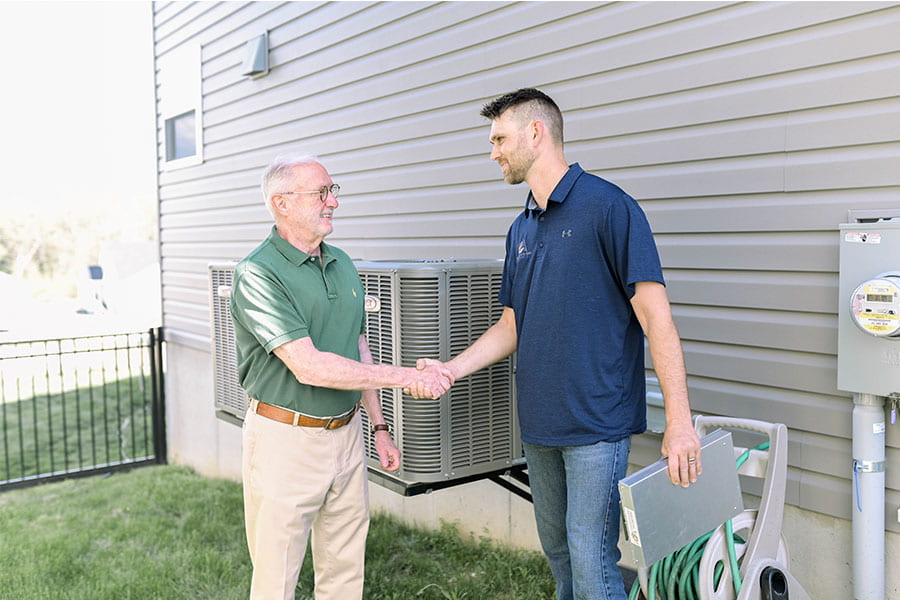
In a larger Wildwood home, a cooling system that is starting to struggle can fall behind gradually across multiple rooms and floors before it becomes an obvious failure. These are the signs worth acting on before the hottest stretch of summer forces the issue.
Wildwood’s wooded setting and larger floor plans mean problems can develop quietly for weeks before they become impossible to ignore. If something feels off, it is worth a call.
Wildwood covers more geographic area than most municipalities in St. Louis County, and its topography reflects that scale. The city spans ridgelines, creek valleys, and heavily wooded terrain that create microclimates within the community itself. Homes on exposed hilltops deal with direct sun and wind-driven debris accumulating around outdoor units. Properties in lower, tree-lined areas contend with trapped humidity and limited airflow around condensers. The specific challenge your cooling system faces depends significantly on where within Wildwood your home sits.
Home size is a compounding factor. Wildwood has a high concentration of larger custom and semi-custom homes built primarily through the 1990s and 2000s, when the city was developing rapidly as a destination for families moving west out of the core suburbs. Many of those homes were built with two or more HVAC systems to handle the square footage, and those systems are now reaching the age where major components begin to fail. Compressors, heat exchangers, and control boards that were installed 20 or 25 years ago are not aging in place quietly.
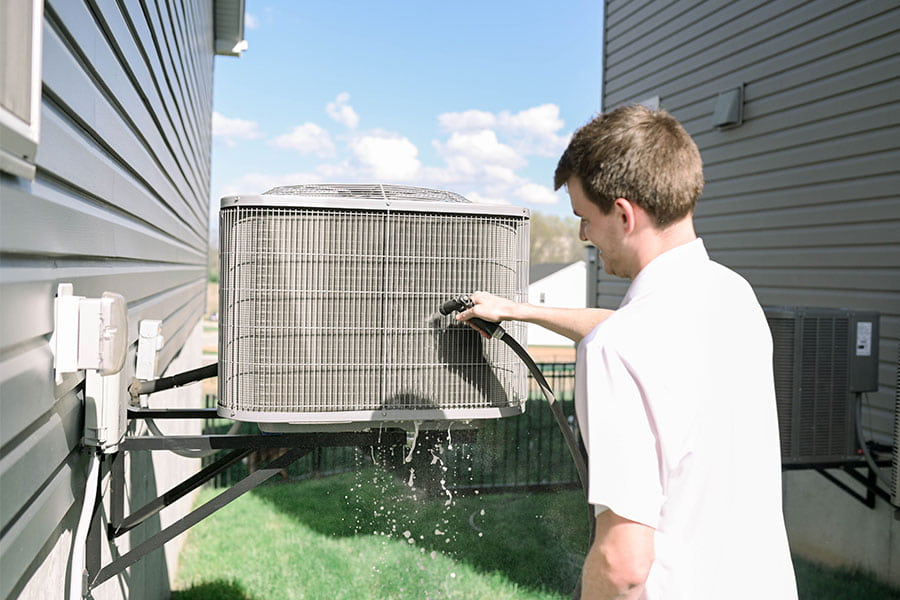
The wooded lots that define Wildwood’s character create a recurring maintenance problem for outdoor condensing units. Oak, maple, and sweet gum trees shed seeds, leaves, and debris in substantial quantities across multiple seasons, not just fall. Condenser coils in this environment accumulate organic matter faster than units in open suburban yards, and a coil that is even partially blocked forces the compressor to run hotter and longer to reject the same amount of heat.
Long duct runs are another byproduct of larger floor plans. In homes where the air handler is centrally located but bedrooms and finished spaces extend far from the core of the house, conditioned air loses energy traveling through ducts that pass through unconditioned attic or basement spaces. By the time air reaches the far end of the home, the temperature and pressure drop can be significant enough that those rooms never quite reach the comfort level the rest of the house enjoys.
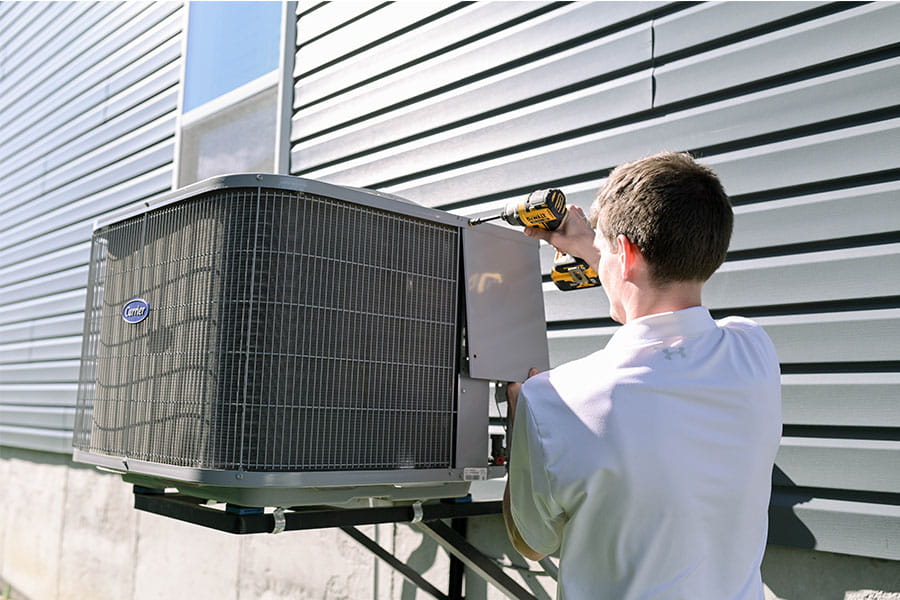
Lori called on a Monday morning in August after a weekend of struggling through a house that would not cool past 78 degrees no matter how far down she pushed the thermostat. She had two systems in her home and was not sure which one was causing the problem.
Her home in Glencoe Crossing had a main level unit and a separate system handling the upper floor and bonus room. The upstairs unit was the one in trouble. When our technician checked the outdoor condenser, the coil was packed with cottonwood fluff, oak debris, and compacted leaf material on three sides, almost completely blocking airflow through the coil. The refrigerant pressure readings confirmed the unit was running hot as a result. Inside, the air filter had not been changed in long enough that the blower was starved for return air.
We cleared and cleaned the condenser coil, replaced the filter, and ran the system through a full load test to confirm normal operation. No refrigerant was needed, no parts replaced. Lori had expected the worst and was relieved to hear the fix was straightforward. We walked her through a seasonal maintenance routine for both systems before we left, with specific attention to the condenser coil given the debris load that comes with her lot.
Wildwood is a community where homeowners have invested heavily in where they live, and they expect the same level of care from the people they hire. Saylors Systems was built on that expectation. Austin and Danielle Saylors started this company because they believed the St. Louis area deserved an HVAC company that operates with honesty and takes genuine pride in the work, regardless of the job size.
Every technician we send to a Wildwood home treats it the way they would want their own home treated. That standard does not waver based on how complex the job turns out to be.
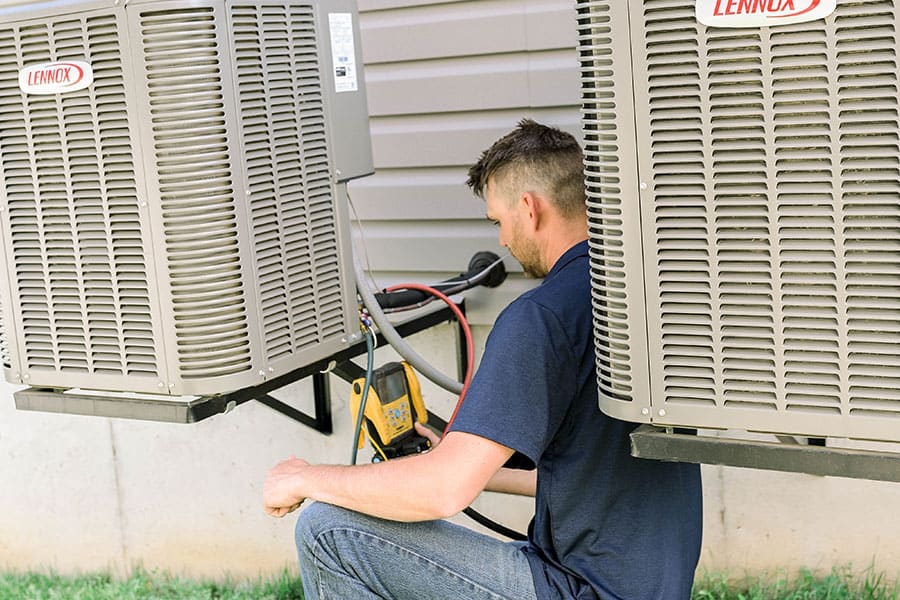
In heavily wooded settings like much of Wildwood, once a year is a minimum and twice a year is often more appropriate. Trees shed debris across multiple seasons, and a coil that accumulates organic material between annual visits can lose significant efficiency well before your next scheduled service. Checking the unit yourself between service calls and clearing visible debris from the sides and top goes a long way.
When one system fails, it is a good time to have the second one evaluated as well, especially if both were installed around the same time. Systems that are the same age tend to reach the end of their reliable service life around the same period, and catching a developing problem in the second unit during the same visit saves a second emergency call later in the season.
In larger Wildwood homes, long duct runs that pass through unconditioned attic or basement spaces lose conditioned air temperature and pressure before it reaches the far end of the house. Duct insulation condition, connection integrity, and static pressure balance all affect how much cooling actually arrives at those distant rooms. A technician can measure airflow and identify where the loss is happening.
Being proactive is almost always the better call at that age. Components like capacitors, contactors, and control boards that are 20-plus years old are statistically likely to fail under peak summer load, which is the worst possible time. An annual inspection that catches a weakening capacitor costs far less than an emergency compressor replacement on a Saturday in August.
The symptoms overlap, which is why a proper diagnostic matters. Both can cause the system to run without effectively cooling the space. Low refrigerant typically produces hissing sounds, ice on the lines, and readings outside normal pressure range. Airflow issues show up as restricted return air, temperature drops across the coil that are too small, and high static pressure in the ducts. A technician can distinguish between the two quickly with the right tools.
Yes, and it is more efficient. Scheduling both systems for the same annual visit means one trip, one diagnostic window across the full home, and a complete picture of where each system stands heading into cooling season. It also makes it easier to track how both units are aging relative to each other so you can plan ahead if one is approaching the end of its service life.