


Ballwin sits in one of the more active suburban pockets of west St. Louis County, and the homes here span several decades of construction styles, from split-levels and ranches built in the 1970s and 80s to newer two-story builds in more recent subdivisions. That range in housing age means we see a wide variety of equipment, ductwork configurations, and system conditions on every street we service.
Our repair work covers the full scope of what an air conditioning system needs to run reliably. We handle refrigerant leaks and proper recharges, failed capacitors and contactors, compressor and fan motor issues, frozen evaporator coils, clogged condensate drains, thermostat and control board problems, and electrical faults from the disconnect box to the air handler. No matter what your system is doing or refusing to do, we diagnose it thoroughly before we recommend a fix.
Older homes in Ballwin often have ductwork that was sized for equipment from a different era, and that mismatch creates airflow problems that get misread as refrigerant or mechanical failures. Knowing how to read the whole system, not just the unit, is part of what we bring to every job.
Waiting too long on a struggling system usually means the repair gets bigger and more expensive. These are the signs worth paying attention to:
If two or more of these are happening at once, something is working against your system and it is worth getting eyes on it soon.
Every repair call has a root cause, and in Ballwin, a handful of issues show up more than any others. Understanding what drives them helps explain why catching problems early matters so much.
The clay-heavy soil throughout west St. Louis County shifts with seasonal moisture changes. Over time, that ground movement can put stress on refrigerant line sets and condenser pad positioning, which sometimes leads to slow refrigerant leaks that go unnoticed until cooling performance drops significantly. These leaks do not fix themselves, and simply adding refrigerant without locating the source is a temporary patch at best.
Electrical component wear is another consistent culprit. Capacitors and contactors in outdoor units take the brunt of Ballwin’s hot summers and keep working through temperature swings that range from the upper 90s down to single digits in winter. That thermal cycling shortens the life of these parts, and a capacitor that is starting to fail will often cause hard-start issues, short cycling, or complete shutdowns before it finally gives out.
Ductwork problems in older Ballwin homes are also worth mentioning. Split-level layouts, finished basements, and add-on rooms create complicated duct runs where leaks and disconnections are easy to miss. When cooled air escapes into unconditioned spaces before reaching the living area, the system runs longer and harder than it should, driving up bills and wearing out components faster.
One afternoon in late July, we got a call from a homeowner named Greg in Concord Village. His upstairs was holding at 80 degrees no matter how low he set the thermostat, while the main floor felt fine. He had already replaced the filter and assumed the system just could not keep up with the heat.
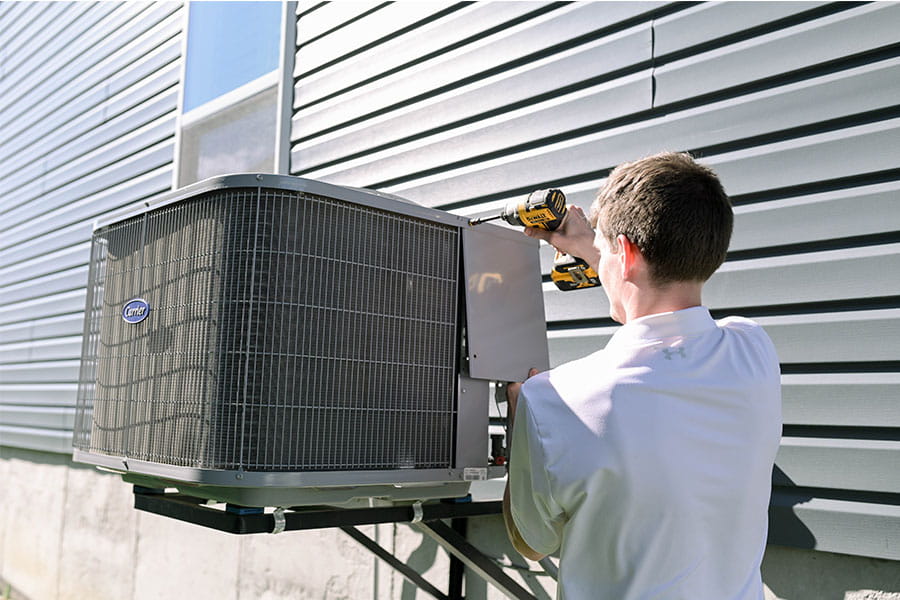
When our technician arrived, the outdoor unit was running but the compressor was barely cycling. Refrigerant pressure was low, and after a closer look, a small leak was found at a fitting near the air handler inside the utility closet. The line had been rubbing against the cabinet edge for years, likely since installation, and had finally worn through enough to cause a slow loss.
We sealed the fitting, verified no other leak points, and recharged the system to the correct level. Within a couple of hours, the upstairs was cooling evenly for the first time in what Greg said had probably been a few seasons. He had assumed the problem was the layout of his house. It was not.
We are not a call center company with a rotating roster of technicians you have never met. We are a small team that takes each job personally because our name and our reputation are on the line every time we pull into a driveway.
Here is what you get when you work with us:
We built this business on repeat customers and referrals, and that only happens when the work speaks for itself.
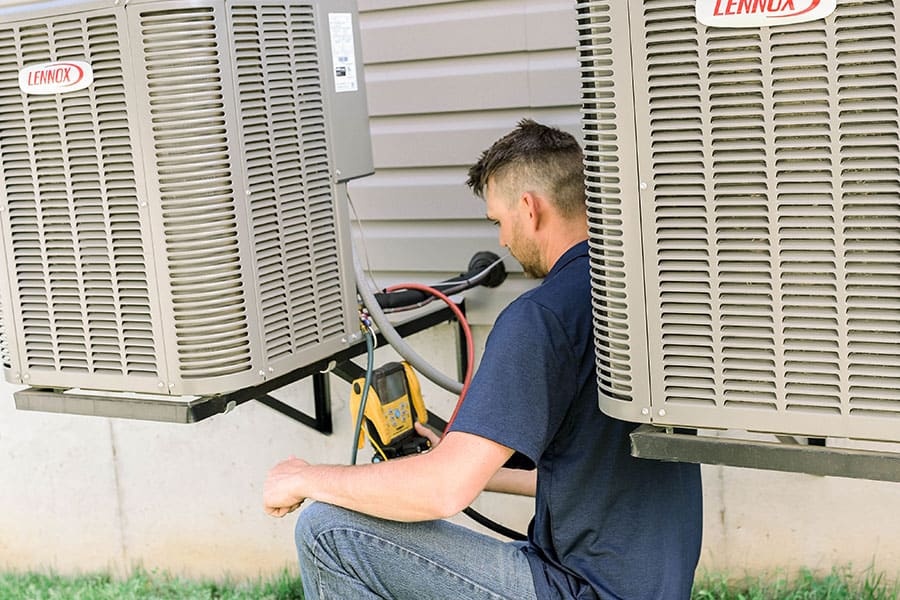

Uneven cooling is one of the most common complaints in two-story and split-level homes. It can be caused by duct leaks, an undersized system, poor return air placement, or a refrigerant issue that affects overall capacity. We look at the full system to find the actual cause rather than guessing.
Once a year is the standard recommendation, and early spring before cooling season starts is the ideal time. In the St. Louis area, where systems run hard from May through September, staying on top of annual maintenance is one of the best ways to avoid mid-summer breakdowns.
It depends on the sound. Banging or clanking usually points to something mechanical like a loose or broken component. Hissing can indicate a refrigerant leak. Clicking at startup or shutdown is sometimes normal, but clicking that continues throughout operation is not. Any new or unusual noise is worth having checked before it turns into a bigger problem.
Yes. A severely restricted filter starves the system of airflow, which causes the evaporator coil to freeze. When the coil freezes, cooling stops entirely. It can also put stress on the blower motor and compressor over time. Changing your filter regularly is one of the simplest and most effective things you can do for your system.
Yes. Every repair call includes a look at both the air handler and the outdoor condenser unit. In most cases, problems in one affect the other, and a thorough diagnosis requires checking both sides of the system together.
Yes. We offer maintenance agreements that include regular tune-ups designed to catch small issues before they become big ones. Keeping your system serviced is the best way to reduce repair calls and extend equipment life.